Deepgram

Speech Recognition

Choosing deepgram vs whisper for your audio

Deepgram is a managed speech platform; Whisper is an open-source speech recognition model that you can run yourself or access through a hosted service. The better choice depends on your audio, latency needs, deployment constraints, and the work your team can maintain.

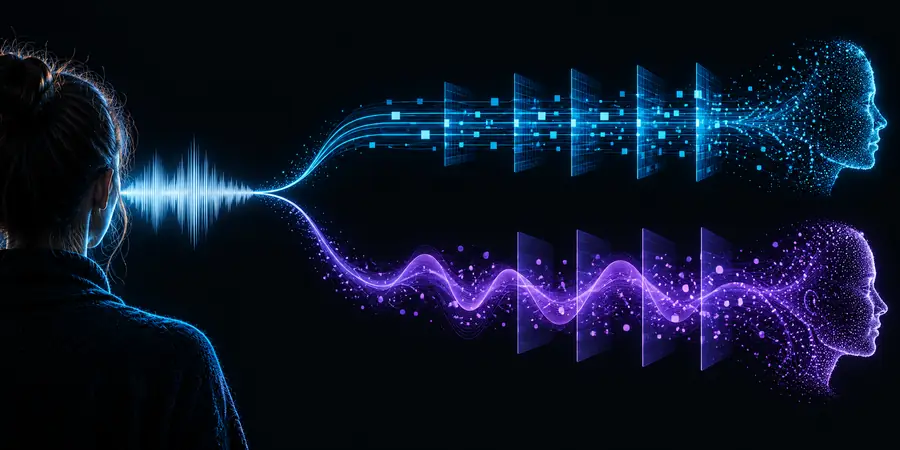
Deepgram voice technology visual

Honest Caveats

Verdict first: choose by operating model

For managed transcription and live-audio workflows, evaluate Deepgram first. For a model you can run on your own infrastructure, evaluate Whisper first. Neither is a universal accuracy winner.

This comparison cannot rank your transcripts

Accent, background noise, specialist vocabulary, channel separation, and recording quality can change the result. A published benchmark or sample clip cannot tell you which option will make fewer consequential errors on your calls.

WorkaroundRun both on the same representative recordings and review names, numbers, timestamps, and omissions by hand.

It cannot promise a fixed latency

Deepgram request configuration and network conditions matter. Whisper latency depends heavily on the model variant, hardware, audio length, and whether you run it locally or through a hosted provider.

WorkaroundMeasure time to first usable text and time to final transcript in your intended environment.

It cannot certify your data handling

Using a managed API and running a model on infrastructure you control create different data paths. Hosting Whisper through a third party introduces that provider's policies, so open-source does not automatically mean local processing.

WorkaroundMap where audio and transcripts travel, then check current vendor terms and your internal retention requirements.

It cannot calculate your total operating cost

An API bill is only one side of the decision. Self-hosted inference also requires compute, deployment work, monitoring, capacity planning, and support when a job fails.

WorkaroundEstimate your real audio volume and include engineering and infrastructure costs in the same comparison.

Test Method

Dimension by dimension

Use one evaluation set and one definition of success. Keep prerecorded files and live audio separate: they expose different performance and integration demands.

Match the job to the deployment

List whether you need batch transcripts, partial text during a conversation, or both. Deepgram offers managed speech APIs, including streaming transcription. Whisper is a model rather than a complete live-audio service; a self-hosted setup needs its own ingestion, processing, and delivery pipeline. A hosted Whisper offering may provide different interfaces, so assess the actual service you would use.

Score errors that matter

Give each option the same noisy calls, quiet interviews, accents, and domain terms. Compare missed speech, substituted words, punctuation, and the time spent correcting the output. Deepgram and Whisper can each look strong on a clean clip while failing differently on names or low-quality audio. Decide whether a small wording error is harmless or changes the meaning of a customer request.

Measure the whole production path

Include upload or stream handling, failure recovery, transcript storage, and review. For Deepgram, test the API integration and inspect the terms relevant to your use. For self-hosted Whisper, include hardware sizing, updates, and monitoring. Record latency and cost under realistic load rather than comparing an API response with a model run in isolation.

Deployment View

Who each suits: two workflow shapes

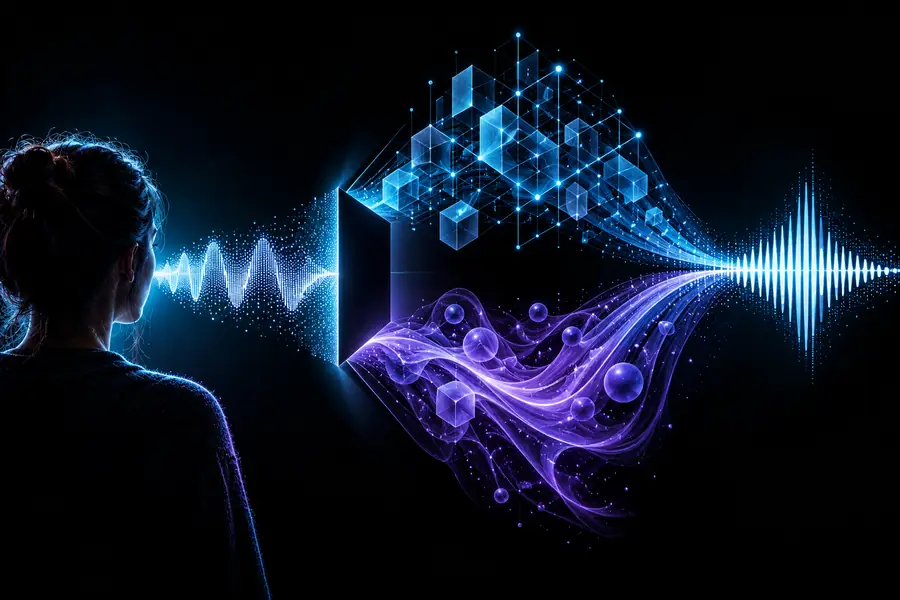
These are decision paths, not sample transcripts or proof of accuracy. The important contrast is who operates the recognition layer.

Managed API path

Illustration accompanying the Deepgram and Whisper comparison
Illustration accompanying transcription alternatives
Self-operated model path

With Deepgram, your application sends audio to a managed speech service and receives results through its interface. With self-hosted Whisper, your team runs the model and builds the surrounding workflow. The illustrations do not show measured output from either option.

Practical Fits

Who each suits: specific teams

Use these profiles as starting hypotheses, not rules. A pilot on your own recordings should be able to overturn any of them.

Live customer-support team

Agents need text while someone is still speaking, and engineers want a managed streaming integration rather than an inference fleet.

Put Deepgram on the shortlist, then test partial results, final corrections, and network interruptions. If choosing between managed vendors, compare their behavior on the same calls.

deepgram vs speechmatics

Research group with local infrastructure

Recordings must remain inside an approved environment, and the group can operate its own compute for asynchronous transcription.

A self-hosted Whisper evaluation is sensible. Confirm that the surrounding software, storage, and review process meet the requirement; the model alone is not a privacy policy.

deepgram alternative for transcription

Media-production team

Editors transcribe interviews and then correct proper nouns, speaker changes, and quotations before publication.

Test Deepgram and Whisper on real interviews and count editing time, not just recognition errors. Compare other managed options if transcript review remains the bottleneck.

deepgram vs assemblyai

Voice-assistant builder

The product must recognize a person's speech and may also need to speak a response.

Evaluate recognition and voice generation as separate stages. Neither a good transcript nor a natural-sounding generated voice proves that the complete conversation works well.

deepgram vs elevenlabs

Make The Call

Migration path: test before switching

Move the workload, not just the model

Start with a small, permissioned set of recordings that represents your real traffic. Define what a usable transcript means, test both paths, and keep the existing workflow available while you check error rates and failure handling. If the candidate passes, route a limited workload through it and review corrections before expanding. For live audio, verify how your application handles partial results and reconnects; for self-hosted inference, verify capacity and operational ownership. Explore the linked voice product as a separate option, not as a promise that it reproduces Deepgram or Whisper behavior.

  • Use the same audio and scoring rules
  • Include security and operations review
  • Expand only after a limited pilot

Common Questions

Comparison FAQ

No. Accuracy matters, but deployment, streaming needs, data flow, latency, and maintenance can decide the choice even when transcript quality is close. Compare both on recordings from your own use case rather than assuming one wins across all audio.

The open-source model supplies speech recognition, not every service around it. If you run Whisper yourself, you must account for compute, audio ingestion, scaling, error handling, and monitoring. A hosted implementation may supply some of those pieces, but its capabilities and terms depend on the provider.

Deepgram offers a managed streaming transcription path worth testing for live applications. Whisper can be incorporated into systems that process incoming audio, but the live experience depends on the implementation you build or the hosted service you choose. Measure partial-result behavior and end-to-end delay rather than relying on a model label.

Running it entirely on infrastructure you control can avoid sending audio to an external recognition API. That does not by itself secure recordings, transcripts, logs, or backups. Confirm the actual data path and access controls before treating either deployment as suitable for sensitive material.

Estimate your expected audio volume, concurrency, and peak load, then compare current API terms with the compute and staffing required for self-hosting. Include the cost of reviewing errors and maintaining integrations. A cheap individual model run does not establish a cheaper production workflow.

Explore voice AI
Explore voice AI